

TRIALOG Conference
- General

Resilient Peri-Urban Transformations and Sustainable Land Governance: Current Discourses, Dynamics and Governance to Cope with Rapid Socio-Spatial Transformation
Dortmund, 16 – 17 November 2026
Peri-urbanization, a global phenomenon driven by rapid urban growth, weak governance, and unaffordable housing, creates transitional hotspots of land transformation. These areas feature mixed land uses, competing claims, institutional fragmentation, and social marginalization. Environmental consequences include farmland loss, habitat fragmentation, flood risk, and water stress. Yet peri-urban regions also foster innovation through hybrid governance.
Overlapping formal and informal institutions produce legal ambiguities—e.g., conflicting urban and rural zoning—leading to insecure tenure, informal settlements, and harm to marginalized groups. Peri-urban areas are vital for resilience, providing “edible green infrastructure” such as food production, flood regulation, and biodiversity corridors.
A resilient framework must balance urban growth, rural livelihoods, ecosystems, and equity. This requires moving beyond static zoning toward adaptive, polycentric governance. Key elements include participatory land rights mapping, flexible tools for peri-urban agriculture, cross-sectoral coordination, and recognizing informal actors as legitimate stakeholders. The framework should capture dynamic transformations and complex actor interactions.
Consequently, the conference invites participants to attend and discusses keynote speeches and presentations under three thematic tracks:
Track I - Peri-urban / peri-urbanisation - a theoretical perspective to contextualise and localise peri-urban and peri-urbanisation in territorial governance.
Track II - Dynamics of peri-urbanization - Analysis of the underlying drivers of peri-urban growth patterns of land use change, demographic shifts, infrastructure and evolution of peri-urban economies including case studies or comparative analysis of impact on livelihood and natural ecosystems in different regions.
Track III - Governance frameworks for resilient peri-urban development – exploration of land governance and, in particular, land management frameworks for sustainable peri-urban development. Key discussion topics include planning instruments and mechanisms to anticipate, address and govern for climate impact mitigation and adaptation, as well as the roles of various actors - local governments, the private sector, civil society, and communities - in the planning and managing peri-urban transformation.
Keynote Speakers
Prof. Dr. Clarissa Freitas

Clarissa Freitas is a Full Professor at the Institute of Architecture, Urbanism and Design at the Federal University of Ceará (UFC), located in Fortaleza, her hometown. Through her position as faculty of the core Planning and Architecture program at UFC, she works professionally for the cause of the right to the city through action-research initiatives cooperating with urban social and environmental movements, often generating geographic data and urban models to highlight territorial injustices produced by mainstream urban design projects. She worked on the Popular Plan of the ZEIS of Bom Jardim, on the Land Regularization Plans of 3 informal settlements in Fortaleza, and on a few Participatory Municipal Master Plans in the Brazilian state of Ceará. She has been using the knowledge produced through her professional experience to engage with some theoretical strands about possibilities of transformative approaches to urban planning and design, such as Insurgent/Radical/Popular Planning. Since 2022, she has been recognized as a “Research Productivity Scholar” by Brazilian National Council for Scientific and Technological Development, CNPQ.
Dr. Gilbert Siame

Dr. Gilbert Siame is a lecturer and researcher specializing in urban planning and development. He coordinates the MSc in Spatial Planning at the University of Zambia and leads the The Centre for Urban Research and Planning (CURP). His research involves a broad spectrum of intersecting components in urban systems and planning, including climate change adaptation in African cities, co-production of urban spaces and services, urban food systems, the dynamics of urban informality and urban infrastructures. He has authored several peer-reviewed publications and scientific reports. He currently serves on two UN-WMO-expert groups: Urban-PREDICT Project and Societal and Economic Research Applications (SERA) working group. He has contributed significantly to applied urban research projects including the Future Resilience for African CiTies And Lands (FRACTAL), The CLARE MECHANICS (Methods to Enhance Adaptation Resilience and Climate Information Services), Capacity Strengthening for NbS in African cities, linking school feeding in African cities with sustainable urban agrifood-food systems, urban governance and decentralisation, community-led climate resilient settlement upgrading approaches, among other projects. He is a regular keynote speaker at major international conferences focused on sustainable and inclusive urban futures in Africa. His conference speaking focuses on diverse urban futures in Africa.
Prof. Dr. Manja Hoppe Andreasen

Manja Hoppe Andreasen is an Associate Professor of human geography at the Department of Geosciences and Natural Resource Management at University of Copenhagen. Her research is concerned with the drivers and dynamics of urban expansion in rapidly urbanizing low- and middle-income countries. Her research examines the motivations and logics of the diverse actors involved in land transactions, investments and property development in urbanizing peripheries and how urban governance arrangements shape the dynamics of peri-urban transformation. Her research offers insights with implications for urban policymakers and planners seeking to foster inclusive, resilient and sustainable cities and engages with key urban policy agendas, including land formalization, settlement upgrading, infrastructure expansion, sustainable transport systems and climate change resilience. She has conducted extensive fieldwork in Tanzanian and Ghanaian cities. While strongly bent towards qualitative methodologies, she has an aptitude for integrating insights from qualitative, quantitative and spatial methodologies.
Prof. Dr. Patrick Brandful Cobbinah

Patrick joined the University of Melbourne as a Lecturer in the Faculty of Architecture, Building and Planning in 2019. Patrick was with the Kwame Nkrumah University of Science and Technology Ghana in 2016 and Charles Sturt University in 2011, and worked in the areas of urban planning and management, urban resilience, environmental management, regional planning, natural resource management, climate change and development of research packages to guide urbanisation and sustainable environmental development in Africa focusing on Ghana. He has also contributed to collaborative projects with researchers at University of Michigan, USA, University of Waterloo, Canada, Georgia State University, USA, Griffith University, Australia, and Wuhan University, China. He is a member of the Planning Institute of Australia (PIA) and the Ghana Institute of Planning (GIP), University of Michigan Presidential Scholar, a Visiting Scholar at the Stellenbosch Institute for Advanced Study (STIAS) at Stellenbosch University, Cape Town South Africa, Global Young Academy Fellow, Ghana Young Academy Fellow, and an Adjunct Research Fellow of the Institute for Land, Water and Society, Charles Sturt University. Patrick has published widely in his research area. He serves as the Senior Associate Editor (Africa Region) for the Journal of Urban Affairs, and serve on the editorial boards of Urban Studies, Habitat International, and Tourism Planning and Development.
Prof. Dr. Rita Lambert
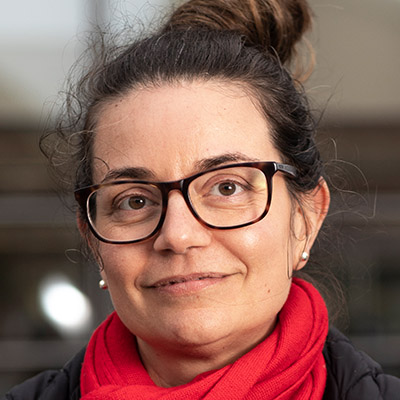
Rita Lambert is an urban development planner and architect originally from Ethiopia. She has over twenty-five years of experience in academia, research, and professional practice across Latin America, Africa, and Southeast Asia. Her work is grounded in feminist political ecology, socio-environmental justice, and systems thinking, and seeks to make visible the historical legacies and contemporary processes that keep people and ecosystems in conditions of vulnerability, while identifying pathways towards more equitable and sustainable urban futures. She examines a range of life-sustaining issues, including water, energy, housing, food, and ecological systems, and explores how policies and everyday practices interact. Urban land has been a central lens in her work, and she has made significant contributions to debates on peripheral urbanisation, land governance, informality, and urban and environmental planning. Through her research, she has examined the violence embedded in planning and land management systems, as well as the mechanisms through which informal and illegal forms of land acquisition become legitimised. She also investigates the reproducion of environmental injustice across cities and regions, exposing low-income communities and ecosystems to heightened vulnerability, risk, and dispossession. Rita has extensive experience leading multidisciplinary research teams as Principal Investigator and Co-Investigator and working in close partnership with civil society organisations, NGOs, community groups, and public authorities. She consistently bridges research, policy, and practice to support socially just and environmentally sustainable urban development.
Prof. Dr. Wilbard Kombe

Prof Wilbard Kombe is based at the Ardhi University, Institute of Human Settlements Studies in Dar es Salaam, Tanzania. He holds a PhD in urban land management from the Technical University Dortmund (TUD), Germany. He has worked extensively in low income settlements in several African cities. His main areas of research include: Urban poverty, informality; urban land governance, the nexus between urban poverty, land and livelihoods of the urban poor, urban inequality and access to basic infrastructure services. Kombe has won several international grants and has successfully executed several collaborative research projects over the last 10 years. The impact of some of his research works includes direct inputs into Tanzanian national policies such as the Urban Development Management Policy (2015); the National Human Settlements Development Policy (2018); the National Land Policy (2018) and the National Housing Policy (2018). Prof. Kombe is a board member of various professional and public bodies. In 2005/2006, he worked for the Human Science Research Council (HSRC), Pretoria South Africa as a Chief Research Specialist. He has also supervised research projects on variety of research issues. These research projects were executed by MDP Harare and funded by the Netherland Government.
Invited Panellists
Dr. Priscila Izar

Priscila Izar holds a PhD in Planning, Governance, and Globalization from Virginia Tech. She is a postdoctoral researcher at the University of São Paulo, Faculty of Architecture and Urbanism, Public Space and Right to the City Laboratory (LabCidade FAUUSP). Before, she was a University of the Witwatersrand Centennial Postdoctoral Researcher at the School of Architecture and Planning, Centre for Urbanism and Built Environment Studies (CUBES), on a sandwich fellowship with the University of Glasgow. Her research explores women’s protagonism in peripheries in contexts of hybrid governance, through an intersectional gender lens, focusing on Brazilian and African cities. She co-organized the international seminar series "Feminising Urban Struggles: Bodies, Territories, and Politics in the Production of Peripheral Spaces" and co-leads the network “Feminist Urban Struggles”, bringing together researchers and practitioners interested in confronting linear understandings of urban planning and development while disseminating situated knowledge through decolonial methodologies. At the Institute of Human Settlements Studies (IHHS) at Ardhi University, Tanzania (2019-2021), she coordinated the Dar es Salaam City Lab, an action-research platform investigating the city's everyday urbanization. Priscila was part-time lecturer at the Wits School of Architecture and Planning (2023–26), visiting lecturer for the Urban Design Theory course at the University of Cape Town’s School of Architecture, Planning and Geomatics (2020-24), part-time lecturer in the Department of Architecture at the Tshwane University of Technology (2021) and at the School of Architecture at Ardhi University (2018 to 2020). An architect and urban planner with a Master’s degree in International Development Policy from Duke University (2000), she has worked as a consultant on urban planning contracts for the City and State of São Paulo, as well as for international organizations.
Dr. Lia Gabremariam Woldetsadik

Lia Gabremariam Woldetsadik is Assistant Prof. at School of Built Environment, Addis Ababa University in Ethiopia and a postdoctoral fellow at the Université Libre de Bruxelles in Belgium. She holds a PhD in the Art of Building and Town Planning from the Université Libre De Bruxelles. Dr. Lia Gabremariam brings extensive practical experience from the Ethiopian urban sector, having worked at various levels of government. Most notably, she led the development of the country’s first federal urban development policy during her tenure at the Ministry of Urban Development and Construction. She also served as senior planner in the project offices, ORAAMP (Office for the Revision of Addis Ababa Mater Plan), and AACPPO (Addis Ababa City Planning Project Office) established for the first and the second revision of Addis Ababa Master Plan. Her current research and teaching focus on planning and governance regimes, government systems and institutions, state-society relations, and collective actions.
Funding


Partner



